








A loop, not a chatbot. Each turn makes the next one cheaper.
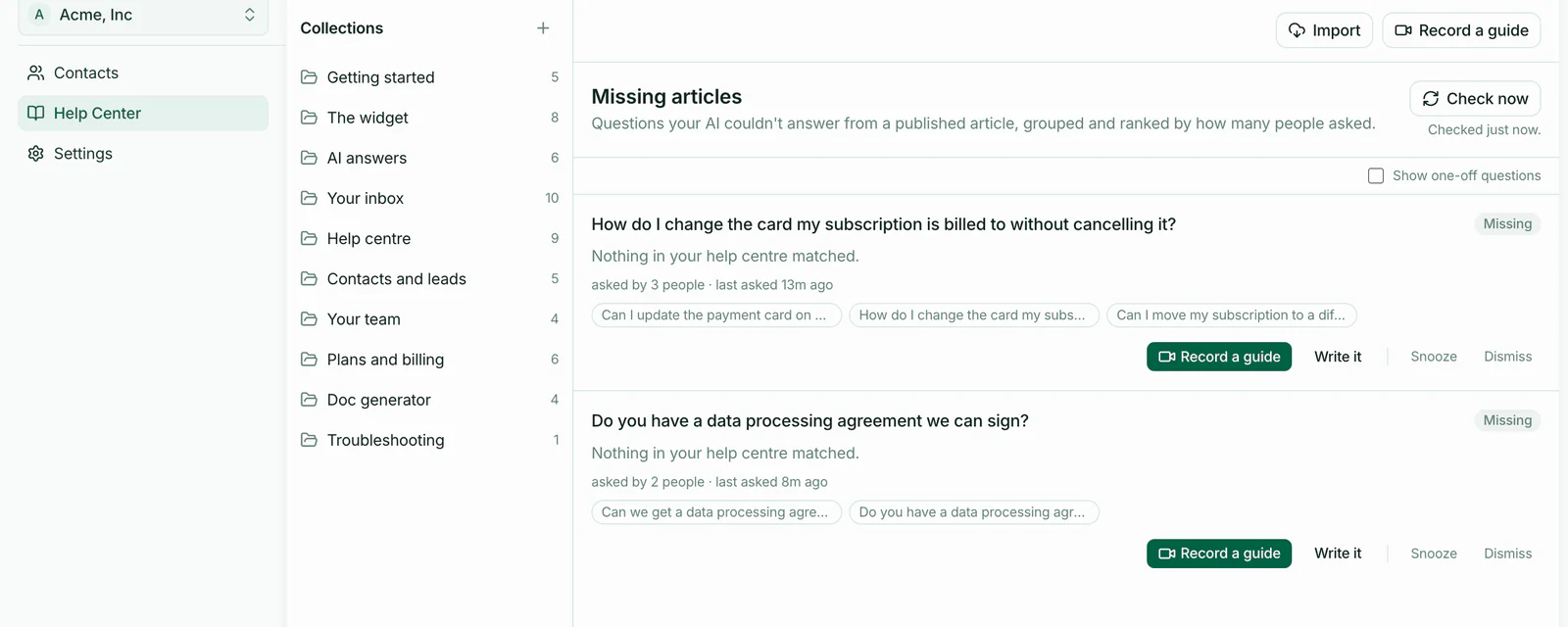
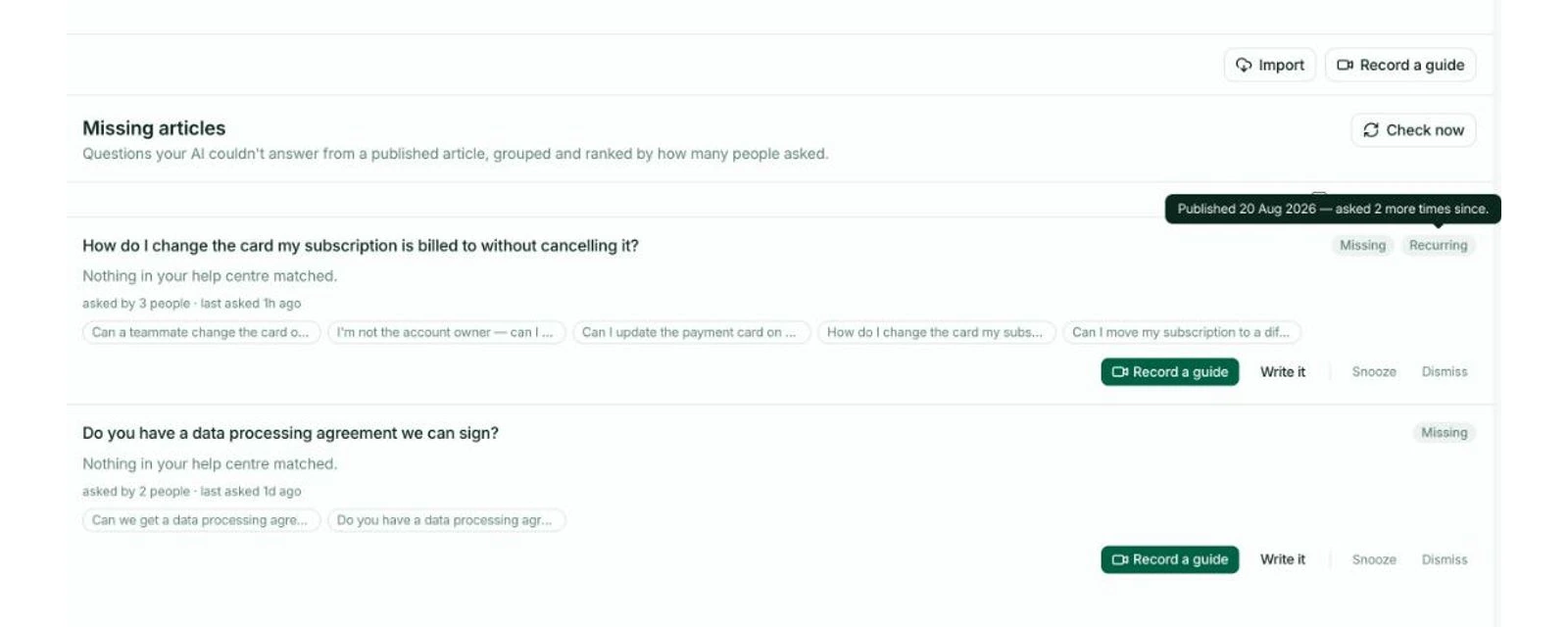
Because the inbox, the help centre and the AI are one system, the gap gets labelled the moment it happens — not reconstructed later from a report.
Don’t take the paragraph’s word for it.
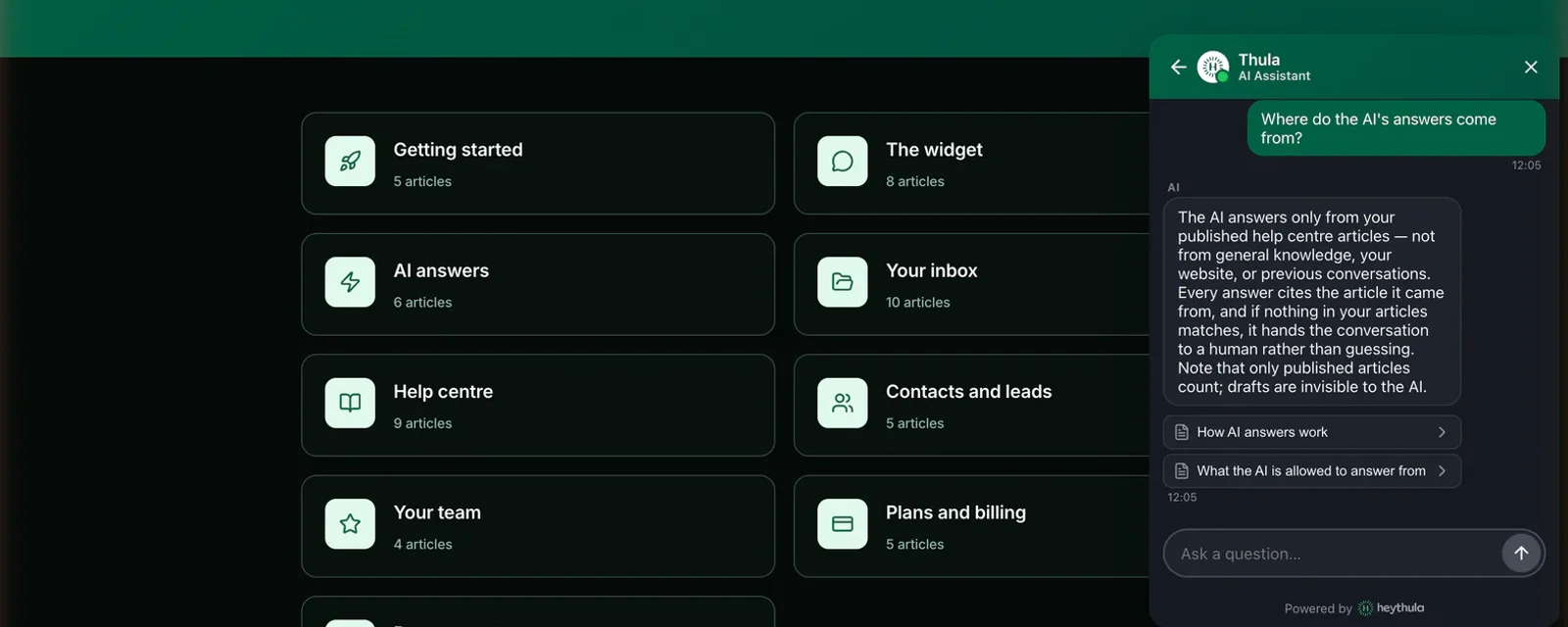
This is the same widget your customers would get, answering from our own help centre. It cites the article behind every reply, and it tells you when there isn’t one.
This help centre wrote itself.
56 articles at heythula.com/docs. We didn’t write them in a docs sprint — an AI read this product’s source code and wrote all 56, we checked every claim against the running app, and we published them. They are also what the assistant on this page answers customers from. It’s the portfolio piece and the working help centre at the same time.
Read the docs →Already paying for a help desk that doesn’t do this?
You’re billed when the AI resolves it.
Hand it to a human and you’re not. A resolution counts once, when a conversation closes with no human involved — enforced in the code, not promised in a deck.
The questions we get asked
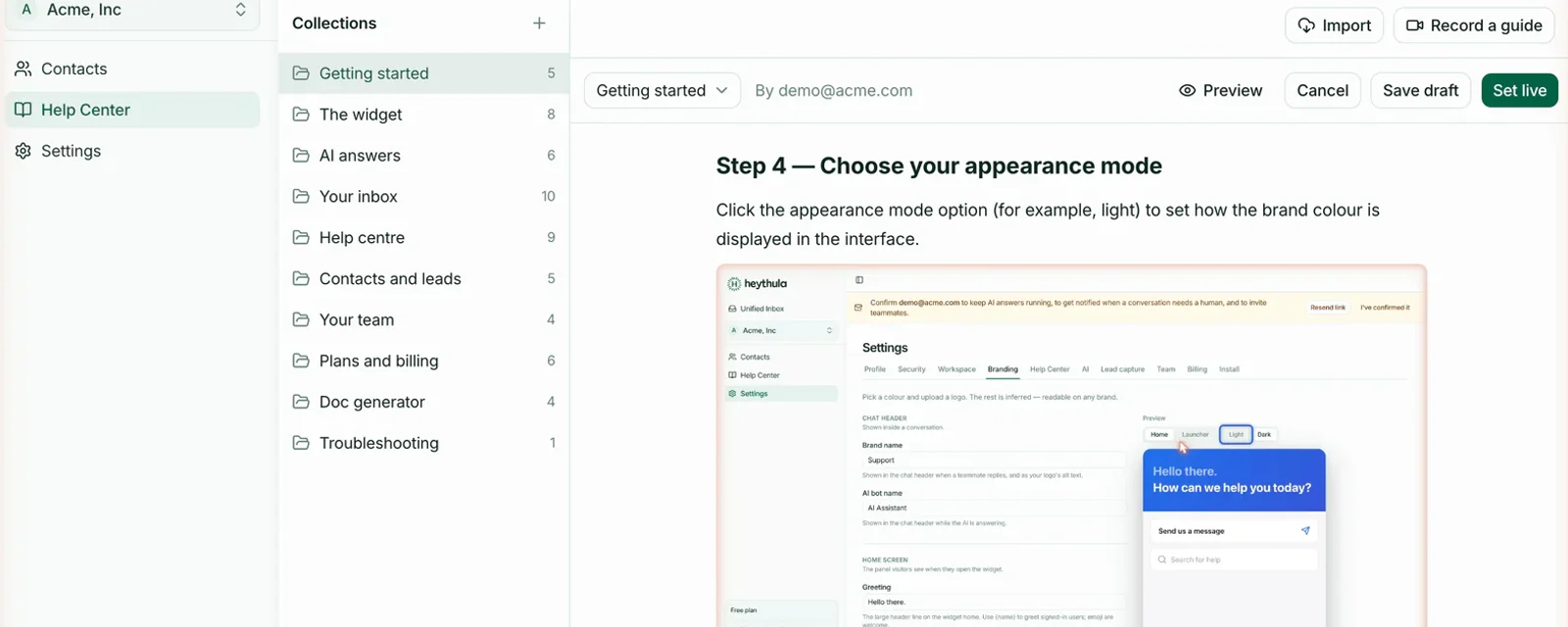
The answering is the last step, not the product. The product is the loop: label what the AI couldn’t answer, draft the missing article from a recording of you doing the task, publish, and watch that gap close — it reopens itself if the question comes back. Bolt-on chatbots read whatever docs you happen to have. This one is trying to fix the docs.
Find out which articles you’re missing.
Point it at your inbox. Within a week you’ll have a list of the gaps, in your customers’ own words.